Speaker 1:
As part of a continuing effort to help clients navigate geopolitical risks, BMO hosted a digital event with senior market economic and investment leaders to explore the short, medium, and long-term implications for North American economies and how the conflict is altering risk dynamics across asset classes. Let's listen in.
Speaker 2:
Welcome to Markets Plus, where leading experts from across BMO discuss factors shaping the markets, economy, industry sectors, and much more. Visit bmocm.com/marketsplus for more episodes.
Mike Miranda:
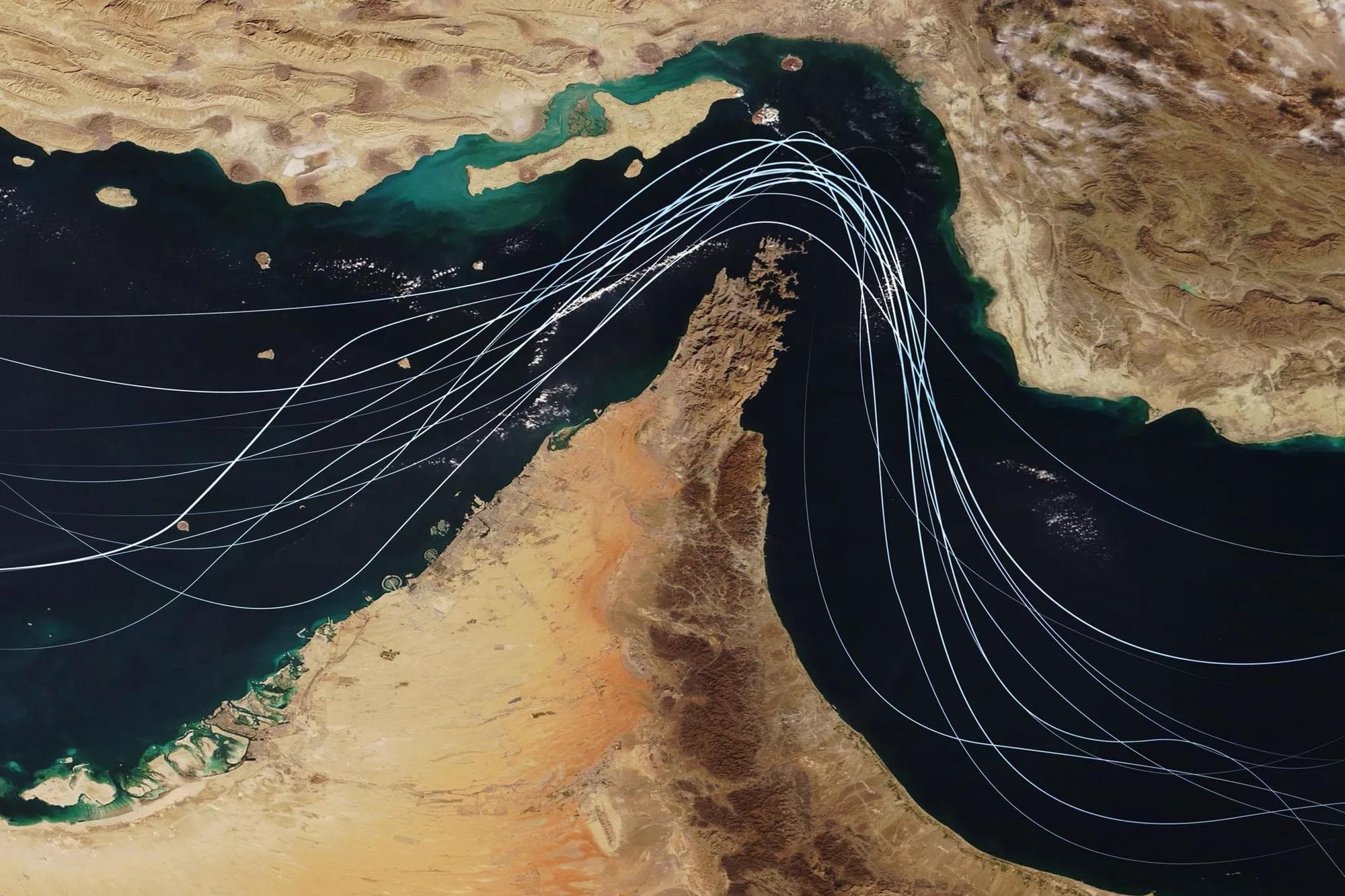
Welcome everyone, and thank you for joining today's BMO digital event on escalating geopolitical tensions in the Middle East and how potential energy supply disruptions are reshaping the global economic and market outlook. I'm Mike Miranda, president of BMO Family Office and head of investments for BMO Wealth. I'm joined today by three BMO experts who will help unpack the heightened uncertainty facing investors. Recent developments around the Strait of Hormuz have raised concerns about physical shortages of oil, natural gas, and other energy products, driving implications for inflation expectations, monetary policy, and investor sentiment. Joining me today, we have Doug Porter, managing director and chief economist at BMO, Randy Ollenberger, managing director and oil and gas analysts at BMO Capital Markets, and Brent Joyce, Chief Investment Strategist and Managing Director at BMO Private Wealth. Doug, Randy, and Brett, thanks for being here. Randy, let's start with you. What have the oil markets, including LNG, been telling investors about what the potential ceiling will be for oil prices?
Randy Ollenberger:
Well, I think the main message that we've been getting from markets is that they believe this conflict is going to be over relatively quickly. And that's a message that President Trump continues to convey that this is going to be over relatively quickly. And so these disruptions that we're seeing, which are very large and unprecedented in many ways, are going to come to an end. And we're going to see a resumption of flows of some sort within the coming weeks. And I think that's what the market's betting on is that we're going to see a normalization of flows by the end of April at the latest. Whether or not we see that obviously will depend on what sorts of actions we see over the next couple of days and how the Iranians themselves respond, but that is what the market is betting on.
Mike Miranda:
All right. Thanks for that, Randy. How much does a geopolitical risk premium add to the price of oil right now and what are the longer term ripple effects of having that risk premium in oil and gas markets?
Randy Ollenberger:
So prior to the conflict, we felt there was probably only a $5 risk premium embedded in the price of oil. We've seen oil move up to $100 or so. We think that that lacks a couple of things. One is the actual physical shortages that are starting to emerge. And keep in mind that it takes 28 days in many cases for oil to reach end use markets from the Persian Gulf. And so this conflict began at the end of February. We're now into the beginning of April. And so those physical shortages are now only starting to show up. So part of the reason we're seeing $100 oil is that those physical shortages are starting to emerge. So it's really hard to say that that whole increase in oil prices is a risk premium per se. I think it does reflect the physical shortages that we're seeing, particularly in the end use product markets where prices have soared well through $150 a barrel.
And that's really what we're seeing in the price today. When this does come to an end though, and let's say it comes to the end by the end of April, I think that risk premium that we had before of $5 will be higher. I think it will be at least $10 on an ongoing basis. And so we will be looking at prices that are more elevated for that reason alone when this does come to an end.
Mike Miranda:
All right. Thank you for that, Randy. Doug, let's bring you into the conversation. So based on the scenarios your team had created about how the conflict could unfold from here, how would you describe the impact we're seeing on the US and Canadian growth and inflation outlook, and certainly interest rates are a key component of that as well.
Doug Porter:
Yeah. Well, just carrying on from some of Randy's comments there that the risk premium could last a lot longer. We've taken a look again. And just as a quick recap, basically when this crisis first broke out, we considered four different scenarios for oil prices and then attached different weightings to them. I think it's fairly safe to say that our most optimistic scenario is not happening, but at the same point, some of the more dire outlooks we had have been clipped somewhat. So where we end up, we're basing our forecast now on an average oil price WTI this year of a little bit more than 80. If you had asked me a couple of weeks ago, I probably would've been more in the mid 70s to high 70s. So even with somewhat better news in the last 24 hours or so on that front, we are now basing our economic forecast on something between 80 and 85 on average for this year.
Just in terms of what that means for inflation and growth, just again, as a quick recap, every 10% sustained rise in oil prices, and I stress the word sustain there, adds a couple tenths of a percent to inflation in both Canada and the US, and we tend to estimate that it cuts GDP by roughly a 10th of a percent. That one's a little bit more rough. It's not quite as mechanical. Now we're not going to have to wait long before we see the real effects. We actually are going to get the US CPI for the month of March next Friday. In fact, we've already had a preliminary number for the European Union. And what we saw there was inflation took a big step up in March, not surprisingly, from 1.8 to two and a half. And we think it's going to be in that relative area of magnitude for March, but that's not the end of it, of course, because we're starting off April with higher gasoline prices than we averaged in March.
So we think ultimately US inflation here over the next month or two is going to first step up to sort of the mid 3% range and then a bit higher than that in April. Canada, we get 10 days later. We think it's going to be a similar story. We're starting off on a lower point in Canada. Inflation in February was only 1.8%. We see it going up to 2.5%. The first step, and then in April, probably a bit above 3%. And what's driving these, we basically, just to put it in perspective, we just had the largest monthly increase in gasoline prices on record in both the US and Canada. And think about it. We've been through many, many oil shocks over the decades. And the reason why it's landing so heavily, of course, is because the oil shock effectively started right at the very end of February.
But in the US, gasoline prices were up by more than 25% in the month, and in Canada was up by more than 20%. Again, those are record moves. Of course, the big question is how sustained are these oil prices going to be? We are expecting them to back down through the summer and fall, and inflation will ebb somewhat. But when we look at it, the annual average inflation rates, we are now looking at something a bit above 3% in the US and close to 3% in Canada before this all began. We were closer to 2.5% or even a little bit lower for both. In terms of the growth outlook, very briefly, so we're starting to see some of the early indicators for March. We just got the ISM for manufacturing, for instance, from the US. So far, there really hasn't been much effect on growth.
And like I said, it's a bit more nuanced in terms of the growth impact. Usually it takes a little bit longer for the growth impact to weigh in. And by the way, it wasn't just in the US, generally around the world, we saw manufacturing hold up relatively well. I think the other side of the coin though is it will affect consumers almost immediately. We are expecting services to be weaker and consumer spending to start softening a little bit in March and show up a bit more clearly in April. But I think the kind of growth shaves we're talking about are relatively minor so far. Where we think we get into the danger point is if oil prices get up to around $120 a barrel or so. And then when we get into the mid 100s, like around 150, I think then we're talking about the real risk of a note right downturn in the global economy and the North American economy as well.
Fortunately, we're still shy of that, but it is significant enough to have us shaving our growth. And just to put some numbers around it, we're looking at roughly 1% growth in Canada this year and about 2% growth in the US. Those are both down only by a couple tenths of a percent so far, but we're taking this almost on a week by week basis and seeing exactly whether our average price assumptions for the year are going to change. The last thing I'll talk about is when we put these two things together, well, what does it mean for interest rates? And of course, the initial market reaction was that the markets were very much focused on the impact on inflation. And essentially at one point they had taken out any prospect of the Fed cutting interest rates this year. And in fact, we're even starting to price in a small chance of Fed hikes.
And for the Bank of Canada, they actually had quite aggressive Bank of Canada rate hikes priced in, at least at the end of last week. There was a little bit of a rethink early this week. The view was in the markets that this is actually going to start to weigh on growth. And there was much more concern on the growth side. And you saw, first of all, some of those Bank of Canada rate hikes get scaled back. And you also now see the market leaning again to the slight chance of the Fed cutting. Our view is that for the Fed, we still believe that ultimately they will trim interest rates, but what this conflict has done is pushed the timeline back. The earliest I could see the Fed cutting rates at this point would be September. At this point, we've got two rate trims by the Fed still penciled in for September and December, and then that's it, we think, for this cycle.
The Bank of Canada, we have been pretty consistent in our view that we believe that the Bank of Canada is on hold, and that's still the way I think the shakes down. I think the bar will be very high for the Bank of Canada to be raising interest rates in this environment.
Mike Miranda:
Very helpful, Doug. When you step back, what are the most important second order effects of this conflict in thinking markets, economy and investor behavior that business leaders and investors should be paying closest attention to right now?
Doug Porter:
Well, there's all kinds of layers to that question. If you just think about the economic impact, I think, of course, a lot of the focus has been on gasoline prices and fuel oil, but that's really only just a small wedge of it. And one thing I would point out is just like they did in the Ukraine conflict, diesel prices have rocketed even more than gasoline. And diesel prices, of course, affect the price of many, many things. Basically anything that's transported will be indirectly affected by diesel prices. Of course, we've also seen jet fuel go up a lot. We do believe airfares globally will start to feel some pressure from that. That's sort of the first level of second round effects. And then we get into some other areas of inflation that can be affected. Of course, the one thing I think many are concerned about is food prices, both because energy is such an important component in growing, producing, transporting, packaging food.
There's a very tight linkage between energy prices and food prices over time. And then we've got the secondary concern about the shutdown of fertilizer supply from the Mid-East. So we know fertilizer prices have rocketed here. And of course, that's an important cost for farmers around the world. And ultimately that will work its way into grocery prices as well. I do not believe it's as serious as what we saw in the Ukraine conflict four years ago, but we came into this with food prices still on the sticky side, especially in Canada I'll point out. And if anything, this just threatens to aggravate and add a second layer of inflation above and beyond just the direct impact of gasoline and fuel prices. Of course, there are some other specific products that are being affected by the shutdown in the Strait of Hormuz, which goes into the production of semiconductors, and maybe more importantly, aluminum.
And aluminum plant was actually hit today by a missile strike in the Mid-East, and we've seen a lot of upward pressure on aluminum prices, even as other metals prices are falling around the world. I would note that aluminum is one of the few products that actually is facing a full 50% tariff by the US on Canadian aluminum products. And I have to wonder if there won't be a serious rate thing on that front whether that makes any sense. Just a couple other things I would point out is, and Randy got to this above and beyond just the near term impact on energy prices. You do have to wonder when we look out two, three years, whether there won't be a sustained increase in the risk premium on oil in general, especially if there's anything to Iran trying to collect the toll, what goes through the straight, whether this is actually a much more long-lasting impact on energy.
In a slightly different vein, I do think it sort of reinforces the importance or the attractiveness of North American energy production, especially Canadian. And then somewhat unrelated, you do have to wonder if there'll be a renewed emphasis on renewables and EVs, perhaps not in the US, but in the rest of the world, you do have to wonder if this won't lead to a much more concerted push on that front. Just the last thing I would touch on just on the geopolitical front is it has led to more ill feelings between the US and its Western allies. Mr. Trump even today was talking quite openly about breaking with NATO, and that is a very interesting potential side effect of this conflict that I don't think too many considered when it first erupted a month ago. All
Mike Miranda:
Right. Thank you for that, Doug. Very insightful as always. Brent, let's bring you in to the conversation. You obviously focus a great deal on markets and when markets are being driven by geopolitics and macro shocks rather than potentially fundamentals, what are the most important portfolio guardrails you focus on to help investors stay disciplined?
Brent Joyce:
Yeah, thanks, Mike. I'd say two things have helped both in the current Middle East conflict, but also over the last year of shocks. And we could talk a bit about shocks going back pretty much a decade now. And those two things would be the feedback loops and resilience on the part of the economy, markets, investors, households, businesses. And so what are the feedback loops? They come from public opinion, corporate lobbying. In the case of tariffs, there's a legislative branch of governments in the Western system, along with the judicial branch as well. And at various points in various countries, these have been more or less effective at providing feedback. But for us as investors, and this is the conversation we have with clients, is there are two pieces of feedback loops that happen very, very quickly, speak very, very loudly and get listened to by policymakers.
One is the equity market, and the most important one I would say is the bond market. And so governments don't own stocks for the most part, but they certainly are participants in the bond market. And whether we look at Brexit going all the way back 10 years, the Liz Truss situation in the UK, we look at April of last year and the tariff announcement, and then certainly even more recently here with Middle East conflict, rising bond yields and increasing borrowing costs for governments who are major borrowers does grab policymakers attention and does curb and help to calibrate, I would say, some of these responses. Certainly more so I would say the ones where they're sole participant and a declaration by somebody, "I want to do this or I want to do that, " particularly on the budgeting or revenue side for governments. And so those feedback loops have demonstrated time and time again over the last decade that they are powerful and strong and that they are keeping a lid on or calibrating some of the behaviors that we're seeing and some of the goals that different governments want to achieve, including goals for the Middle East.
The second one that I mentioned is also a bit related, I guess, and it's resilience on the part of households being adaptable, corporations being adaptable, investors being adaptable to these things. If you think about, and I'll go back to the decade example, but it really does come home and it's the same kind of behavior that we're witnessing in the past month and a half. We've had repeated shocks and just starting in 2016 for argument's sake, but it is with Brexit then. You have the first Trump administration, you have Biden, you have Trudeau here in Canada, COVID, we have the inflation spike, Ukraine war, tariffs, unfortunately far too many conflicts in the Middle East really to list. And through all of that, 10 years, we've seen a threefold increase in North American equity markets. S&P/TSX Composite up 12% compound through that. The S&P 500 is up 14% compound through that.
And so that's testimony, evidence, faith when we're talking to investors in times of this uncertainty, that investors, households, businesses can adapt and pivot. We've had innovation that's helped through that as well, vaccines for COVID, but technology as well. And this is not just about information technology. Fracking technology has made the US the world's largest energy producer. We were doing five million barrels a day in 2011, nine million barrels a day in 2015 of oil, 13 million barrels per day. That's all basically fracking and technological innovation. US liquefied natural gas certainly helped Europe wean off of Russian energy. And then now we've got the prospects for AI and it's not just AI, it's robotics as well. And so the world, humanity is incredibly flexible and adaptable, and that's reflected in the resiliency that investors have come to count on and to rely on. And I think it's well placed.
Mike Miranda:
All right. Thank you for that. You mentioned, Brent, a bit about the bond market and Doug touched on it a bit as well when he was talking about interest rates. What signals are you reading from the bond market right now and how does that affect your approach to equity market investing?
Brent Joyce:
Yeah. The bond market in some respects is easier to figure out than the equity market. In some respects, it's more complicated. The questions are easier, but the answers are more difficult. Bond yields rise for three basic reasons. Real economic growth is better than bond yields can be higher. If we have inflation, then bond yields certainly which would reflect that as higher. And then the other one's a bit nebulous is this term premium. And think of that a bit as the credit quality of governments. Nobody's worried about bond yields higher because we've got better economic growth. That's a good news story. The opposite of that is creeping into the bond market today, as Doug alluded to. If this persists long enough, then we will see some growth dampening impacts from the commodity shock, but certainly it's the inflation piece. And so bond yields moved higher in March, largely on the concerns over inflation.
But they've been seesawing as that impact. And you see it across the curve, shorter term yields reflecting that inflation's going to pop in the near term and then longer term yields a little bit better behaved and certainly longer term inflation expectations saying, "Well, if this goes on long enough, then the script flips and it becomes growth dampening." And so it's been [inaudible] for bonds, a lot of volatility, but net net, the bond market has provided some ballast through the last month for investors. And that's what we would rely on it for from a portfolio construction standpoint. What does that mean for stocks was the second half of your question. Well, equity market valuations would need a downward adjustment based on three variables. One, and I've covered this ground is the possibility that central banks won't cut rates, especially in the US where there was an expectation that they would do that.
And then this risk that central banks need to raise rates in order to quell inflation. I wholly agree with Doug that central banks are going to do nothing through this piece and they will look through the energy shock until it unanchors long-term inflation expectations, which takes time and hasn't happened yet. But that certainly is what equity markets get nervous about. They like lower rates and we're counting on it. And then that feeds into just elevated long-term bond yields where it's not just central bank behavior that's impacting those. It's the other three pieces that we said. And this is where we have the tug of war between the inflation piece and the growth dampening piece, and the inflation piece is winning more days than not. And then for stocks, those impact the valuation piece, higher bond yields, all else equal means we don't have as high on the valuations for equities.
And so when we get earnings growth, we don't multiply that by as big a number in order to get the price outcome. And so the earnings growth piece then is dampened by a dampened growth impact. And so you get the double whammy there on lesser growth impacts valuations on sentiment and impacts earnings growth. All of that is to say it's too early for us to be changing what was a pretty good forecast for 2026 for equity market returns. We haven't seen enough damage long enough to bring those down. In Canada, there's offset because of the energy contribution on earnings. Valuations certainly would be mixed there. And if we were to change, and I emphasize if, because I do think it's too early to be thinking about this, we would be taking off some of the growth upside that we had already penciled in. We were on the cusp of upgrading our S&P 500 targets prior to this.
And so I guess you can call that a little bit of gravy that we can take off the table, but there is still a very reasonable path for holders of diversified portfolios to have high single digit return outcomes by the time we get to December.
Mike Miranda:
Right. That's very helpful. And I think your points are spot on. Obviously the market is fluid given all of the moving parts here and certainly we saw down movement in prices in March and the last couple of days have taken some of that back and we've seen markets move higher. So having these calls and sharing our thoughts with clients is helpful because it's certainly a fluid situation. So let's bring all three of you back maybe for just one last closing thought. We'll start with Randy, then Doug, and then Brent can close us out. When you step back and consider this current macro environment, what is one risk investors may be underestimating and one stabilizing forces that they may be overlooking as they think about the next few months. And so Randy, let's start with you.
Randy Ollenberger:
Sure. I mean, I think the biggest risk here is that the physical shortages are just starting. And so I think there's a risk that investors are a bit too complacent because we haven't seen commodity prices perhaps spike as high as the worst case scenarios. They've gone to a hundred and retreated, but those physical shortages are just starting to emerge. We're already seeing and hearing about jet fuel shortages potentially emerging in Asia pretty quickly. And so those physical market shortages will have some duration to them. They will take some time to correct. And so even if this war ends very quickly here, there's going to be some lingering effects in product markets for jet fuel prices, for gasoline prices, for diesel prices that I think that investors are potentially underestimating. On the positive side, I mean, what I would say is, even though as Doug mentioned, gasoline prices have increased very dramatically, they're still not at levels that we saw, for example, in 2022.
They're still much lower than we saw in the early 2010 period, and in real terms, even lower than that. And when we look at oil prices below 100, I mean, again, we had oil prices through a hundred from 2008 through 2014. We had them at that level in 2022. They're not that high by historical standards, particularly in real terms. And so I'm not as worried perhaps from the perspective of demand destruction in the oil market because the prices simply aren't that high.
Mike Miranda:
All right. Thanks, Doug. Over to you then. Similar questions.
Doug Porter:
Well, I guess in terms of the risk, I would go back to one of the last points I made, and it sort of brings the whole trade story back into the picture. I do think the ill feelings between the president and the Western allies could potentially spill over into what was already a fairly fraught global trade backdrop. We have not nailed down anything really on that front, and especially with the Supreme Court ruling about a month ago on emergency tariffs. I do think the US is looking to basically recreate that amount of revenue that they were earning on tariffs last year, whether through one of the other statutes, first of all, we're going to probably go to a 15% global tariff. And I am just concerned that we haven't heard the last of the trade war. And again, the renewed ill feelings between the president and Europe in particular could re-aggravate that.
And then of course, hanging over our heads, we haven't talked about it, but we still do have the USMCA, which has to be reviewed by the middle part of this year. I suppose I could almost turn that into a positive and say that there is an optimistic scenario here that Canada's been a little bit under the radar from the US point of view in terms of the conflict. And there is a case to be made that maybe this slightly improves the chances that we will get a reasonable accommodation on the USMTA simply because the president would like to move above and beyond and get a win on this before the midterm elections. I doubt it's going to come by mid-year, but there is certainly a little bit more of an optimistic scenario. In terms of stabilizing forces, actually, I was going to say something relatively similar to what Randy indicated, but I would just say more broadly, a bigger point is just how resilient economies are.
They have an amazing power to self-heal if policymakers do not get in the way. And I would sort of just stress the point that Randy made in a slightly different way. We've got $100 oil today as we speak. If you adjust past oil prices for inflation, we essentially had $100 oil from 2005 to 2015. We have been here before and the global economy can certainly manage $100 oil. I think it's just the shock. Again, a monthly move like we've never seen before. It is a shock to the system, but we came into this with very low oil prices, I would suggest. And so some of this is a correction to that. The final point I would make is the North American economy is quite resilient to this. I mean, the one thing that's mightily changed, for instance, since the 1970s is, first of all, both Canada and the US are now very significant at oil producers, oil exporters.
And on top of that, the share of oil in the economy is much, much lower than it would've been in the '70s. So this is an important shock, but it is manageable.
Mike Miranda:
All right. Thanks, Doug. And Brent, close us out.
Brent Joyce:
Yeah. Well, we all seem to be talking our book here, and I'll stick to it as well. Rising bond yields for any other reason than rising economic growth, and that would be inflation or the term premium piece is a risk. We saw a little scare of that with the election in Japan back in January, so that would be on the radar. It could be triggered by a central bank policy mistake. I don't see that in the cards, but it is a risk. In terms of stabilizing force, I would echo the resilience, a lot of talk about the inflation adjusted price of energy. And Doug hinted at this in terms of the amount of economic output that the North American economy can generate off of one barrel of oil today versus where we were 10, 20, and 30 years ago. There's a massive amount of efficiency that has improved.
This is not the 1970s. Just look at the cars that are driving around. And I don't mean just EVs, right? Energy efficiency is a real thing. I'll close with echoing Doug's positive comments on the free trade angle. You don't want to necessarily take advantage of somebody else's fight, but if the Europeans and the Americans are in a spat, the returning to this notion that was really Ronald Reagan and Brian Mulroney's inception decades ago of a fortress North America mindset, this conflict and certainly those ill feelings can certainly feed into that. It would be a nice path to walk down, I think.
Mike Miranda:
All right, thank you. Well, we covered a lot of ground today, exploring the impact of the energy shock, the second order effects, and what they all mean for investors and business leaders. Randy, Doug, and Brent, thank you for your insights and thank you all for watching and listening. We'll continue to host events designed to help clients navigate today's geopolitical uncertainty, including our upcoming session on April 8th, so just a week from today. And with that, I wish you all well. Have a great rest of your day.
Speaker 2:
Thanks for listening. You can follow this podcast on Apple Podcasts, Spotify, or your favorite podcast app. For more episodes, visit bmocm.com/marketsplus.
Speaker 1:
The views expressed here are those of the participants and may not necessarily represent those of BMO Capital Markets, its affiliates or subsidiaries. For BMO disclosures, please visit bmocm.com/podcast/disclaimer.