Speaker 1:
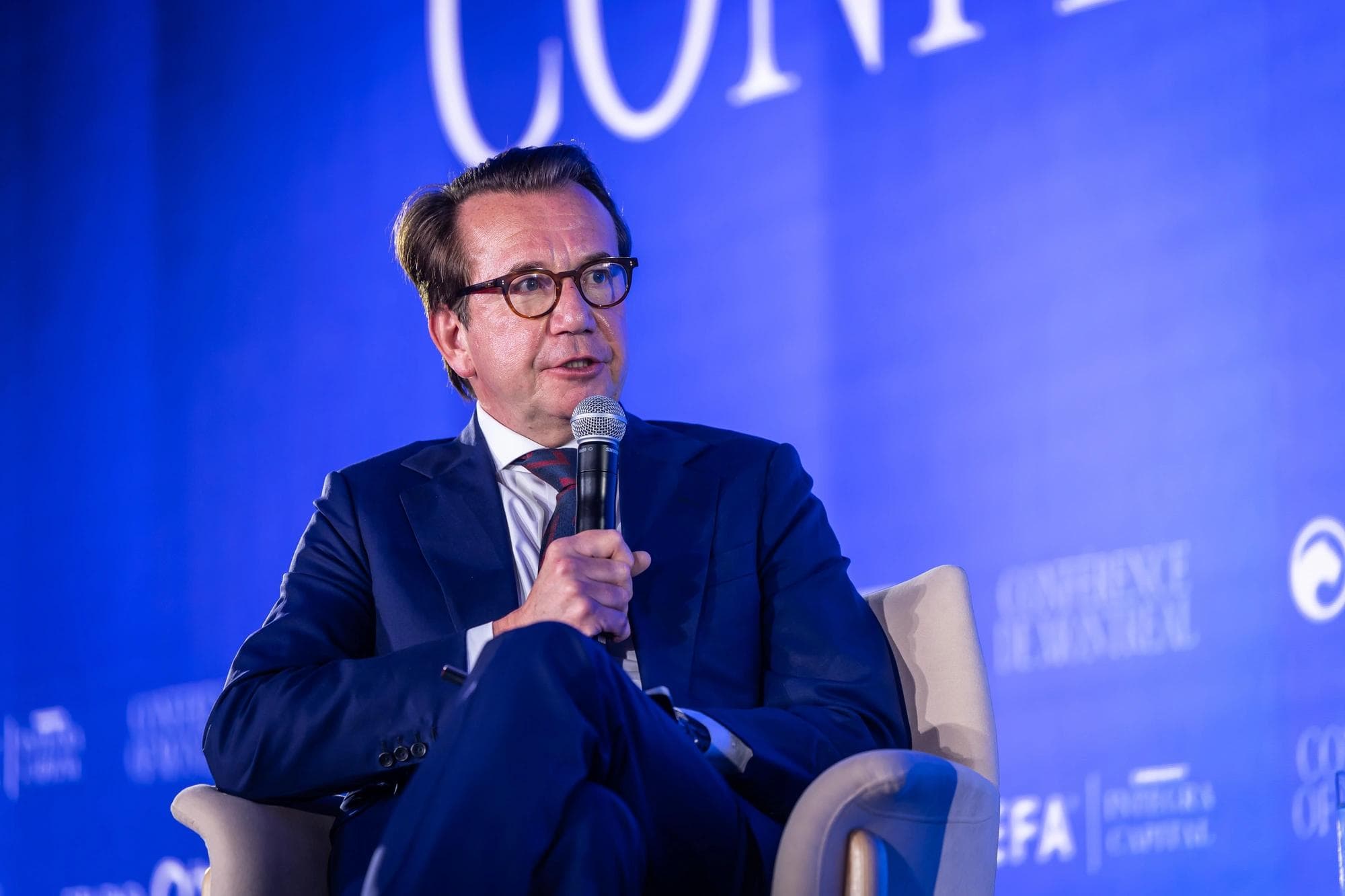
From the conference of Montreal on June 9th, today's discussion, USMCA at a Crossroads, is moderated by Scott Brison, Vice Chair, BMO Wealth Management, and features Steve Verheul, Canadian co-chair of the Coalition for North American Trade, Kevin Brady, US co-chair, and Ken Smith Ramos, Mexican co-chair. Let's dive in.
Speaker 2:
Welcome to Markets Plus, where leading experts from across BMO discuss factors shaping the markets, economy, industry sectors, and much more. Visit bmocm.com/marketsplus for more episodes.
Scott Brison:
Welcome back to the International Economic Forum of the America's Conference de Montreal. We have a great opportunity today to speak on North American trade and understanding of the current state of play in the renewal of the US MCA. Steve Verheul was the chief negotiator for Canada in USMCA. Kevin Brady, you served 26 years as a member of Congress, chair of the trade committee and also a chair of the very powerful Ways and Means Committee. And then Ken Smith Ramos, you were the chief negotiator for Mexico at that time under a different government, Pena Nieto's government at that time. So I might start with you, Kevin. You have a perspective from the congressional perspective. How is the USMCA viewed within Congress on both sides of the House? What are the perspectives? And also from a timing perspective, the impact of the midterms.
Kevin Brady:
There is strong support in Congress for this agreement and for good reason, especially as it was modernized. Thank this work of these leaders up here six years ago. Every member of Congress can point to farmers, manufacturers, small businesses, large companies who depend upon this unique relationship. And in most states are US jobs tied to this agreement. If added together would be the single largest employer in almost every state in the US. And so there was historic support, bipartisan support for the agreement when it was passed six years ago and I've worked on 13 of America's 15 free trade agreements. It was really remarkable and viewed as a win for workers, for farmers, for labor unions, for the economy. And it has delivered there. Obviously both countries, our partners are our best and largest suppliers and clearly what has been proven out is that when the three countries combine their strengths, when we build together, buy together, sell together and compete together as one, we are economically stronger.
We are more secure and better positioned to compete and win against China in the future. And so I think that is felt back home in congressional districts. And so there is a strong, I think, basis support there, but a lot has changed over the last six years. So the coalition's effort along with our business agtech service companies across all three countries are making the case on Capitol Hill why North America trade matters for the US and certainly for our two countries. Timing, to be determined. We know what it says on paper. In real life, it may well be different. As for political impacts, I think really the timing will be driven by the discussions with Mexico and Canada and the ability to strengthen this agreement, to preserve the key design of it and hopefully at the end of the day, extend it for the long term.
Scott Brison:
So Ken, you had the role of chief negotiator for Mexico under President Nieto. Under President Sheinbaum, these are very different governments ideologically and philosophically in terms of market-based economics and the economy. One is how that may impact these negotiations. And secondly, at the political level within Mexico and also the public level, where is public opinion on USMCA and the political players at other levels of government?
Ken Smith Ramos:
Yes. As you point out, despite the fact that there was an important political change in Mexico from the Pena Nieto administration to the Lopez Obrador administration and the continuation of the left wing government in Mexico now under Claudia Sheinbaum, there is strong support on the government, on this government today, on the USMCA, on the importance of trade integration between the three countries. If you just look at the numbers, we have a trade agreement where Mexico's exports 83% of their exports to the United States. Within North America, 50% of all the foreign direct investment that we have received over the last 20 years come from the United States and from Canada. If you look at our overall sort of dependency or importance of the external sector for Mexico, our exports to the world account for almost 35% of gross domestic product. So there is a consciousness on the part of the government on the importance of maintaining of preserving and extending the USMCA.
This has been stated repeatedly by President Sheinbaum, by Trade Minister Marcelo Ebrard and there is public opinion that supports the agreement. Mexico conducted a large consultation process publicly last fall on what elements of the USMCA should be analyzed for the upcoming review and over 85% of the comments received, there were workshops done nationally by sector, agriculture, automotive services. There's widespread support for the agreement. That was not necessarily the case 35 years ago when we were negotiating the original NAFTA. There was a lot of concern about opening the Mexican economy and how we would be able to compete and to fare with the US economy, with the Canadian economy. If you fast-forward 35 years now, it's a strong success that we have had in our country based on not just a trade agreement with the United States, but our large network are 14 trade agreements with 50 countries.
Of course, there are important differences in the approach that we're seeing in the United States as Chairman Brady was mentioning, geopolitical changes throughout the world that are affecting the North American economy. And this is precisely the time where from the private sector perspective in Mexico and from the government perspective, it is through the unity of North America, through strengthening North American integration that we will be best able to deal with international shocks. So the competitive pressure from China, the situation that we're seeing in the Middle East, which is affecting the world economy in terms of energy prices and fertilizers, et cetera, it is precisely by preserving and extending the North American Free Trade Agreement that we can become even a stronger competitive region.
Scott Brison:
Steve, same party, but a very different prime minister in Canada and you have a unique perspective. Any thoughts on the current team and their approach versus the one that was necessary then, how would their approach be different in dealing with this under Trump or President Trump's 47 versus the 45th administration?
Steve Verheul:
Well, I think the first thing I'd say is that we're dealing with a very different kind of negotiating agenda at this point. We were negotiating 34 chapters. The whole agreement top to bottom when we had the negotiations back in President Trump's first term. This time we're really looking at a core list of difficult challenges, but it's much more narrow than we were looking at before. So with respect to the team at the public service level, Janice Charette is clearly the chief negotiator. Her number two is Martin Moen and Martin Moen was my number two. So there's a consistency among teams. I think you're right to say that there's different kind of approach at the political level. We did not have that kind of direction from the top in the same kind of way. Now at the time, once we got into more difficult issues, Minister Freeland was very active in the negotiations, including at the negotiating table and certainly the Prime Ministers and others were following what we were doing quite closely, but they were not as directive or as engaged as under Prime Minister Carney's government.
Scott Brison:
How would you view success of the renewal discussions for the USMCA fully in agreement from a North American perspective, how would you view success and what would success look like in terms of some individual issues for each country?
Steve Verheul:
Well, yes. I think from a Canadian perspective at least, probably our primary objective is to ensure that we do as little damage as possible to the agreement because much of it we think has been working well. It's delivering on the kinds of intentions we had for the agreement to do. More and more trade is happening within North America as compared to countries outside of North America and that's what we wanted to achieve. So the North American market has become even more integrated, even more competitive over time. So we don't want to disrupt that. Secondly, I think we've seen over the past few years that we really need to make sure that we maintain this as a legally based agreement with dispute settlement provisions with enforcement provisions because I think we were doing quite well for the initial years, but we've now seen that the US administration has introduced tariffs that are inconsistent with the agreement, other measures that are inconsistent with the agreement.
And the biggest concern I keep hearing from the private sector is they want to know what the rules of the game are. They want to know what the expectations are so that they can start to make investments, long-term commitments and planning. And if we have the kind of uncertainty we've seen over the past year, they don't get that. So a lot of investors are kind of sitting on their hands wondering, is the US going to come back to the kind of relationship we had before or are we in a different world where we should be looking more seriously at diversification? So we need to get more predictability, more assurance that the obligations are going to stick.
Scott Brison:
Victory or success from President Trump's perspective.
Kevin Brady:
So clearly long held beliefs by the president. For him a win would be lower trade deficits going forward, more production inside the United States and an economic security package among all three countries focused on China, focused on investment, on screening, on transshipments, a number of those areas. I would add to the priorities, congressional priorities, which is enforcement, compliance of the agreement today, focused on individual, some trade, they call them irritants, but issues that they believe should be addressed in the review. I would say for our businesses across the board in the United States and in Canada and Mexico, keeping the smart design, preserving the smart design of USMCA is crucial. Those low tariffs and barriers, exemptions from other tariffs, that integration has driven investment and stability in remarkable ways. That I think will be key. I think too, at the end of the day, if this is done right, all three countries will be producing more in North America.
We will have more reliable supply chains. We'll have better control over the critical inputs in here and we'll be able to compete against an Asia-centric block and especially China in the future. I think at the end of the day, if we work together to combine our strengths, we will be the innovation hub of the world. We will be more competitive than any region in the world. We will be more secure and have reliable production going forward. At the end of the day, I think that is the win here that the coalition certainly is hoping to help shape.
Ken Smith Ramos:
I think from the Mexican perspective, the most important thing is to preserve this largest free trade area in the world. Essentially for 30 some years, we've been able to have a complete free trade between our countries with certain exceptions. There's of course anti-dumping duties on some products, et cetera. But if you look at the overall perspective of North America, it is precisely having no tariffs, facing no obstacles between the three countries that has given that very strong competitiveness boost to our region. So from the Mexican perspective, both the government and the private sector either eliminating the tariffs between the North American countries or reducing them to the lowest level possible so that we still are Mexico and Canada, the countries that have the most direct access and unfettered access to the US economy is essential. So from the Mexican perspective, we look at elimination of tariffs, but as was mentioned before, we have a trade agreement that has 34 chapters, market access and issues related to actual tariffs is just one of the chapters.
We have many other chapters that need to be preserved. We need to make sure that in the conversation within North America, we respect the investment rules and maintain the investment rules that we have established, sanitary fight to sanitary measures, financial services, the dispute settlement mechanism. We have to make sure that we don't backtrack on those. And the other very important issue is what Kevin mentioned, which is the current architecture of the agreement. We have great benefits from the fact that it's a trilateral architecture, that all three countries are playing by the same rules, same customs procedures, same technical standards, same approach to the science when it comes to sanitary and phytosanitary measures. So that trilateral structure must be preserved. And going back to your question on what are the avenues of success, the chances for Mexico in our case to work closely with the US and Canada, I think with the US in particular, there's two main elements.
One is cooperation on the issue in facing competition from China primarily. From other regions in the world, but primarily what should be the North American approach on the one hand to contain unfair trading practices when they manifest themselves, but also how do we create the capabilities within North America to attract and retain investment in those sectors of the future where China has a predominant role right now. Whether we're talking about critical minerals, lithium batteries, semiconductors, creating those capabilities towards the future and being able to erase economic borders between the three North American countries will give us that boost to really be the most competitive region in the world. So there's the China collaboration piece within North America.
And the second element is what Chairman Brady was mentioning, which is to the degree that is possible, ensure most efficient enforcement of the agreement. There are still areas where the US may not be complying on the decision on the Automotive Rules of Origin panel. Mexico had some obstacles that it had to eliminate on agricultural biotechnology. There are bilateral trade issues between the US and Canada. So working lowering the dependency on Asia and at the same time solving trade irritants between three North American countries can actually give us that space to find a solution with the United States, with Canada, and with Mexico to preserve our trade agreement.
Scott Brison:
In the last negotiation or the creation of USMCA, there was a China clause, but I don't think people are aware of it. So defining quickly that clause, why Mexico and Canada agreed to it and what's going to happen with that clause in these negotiations given the importance of trade diversification, Steve?
Steve Verheul:
Well, first of all, what the agreement on that provision basically says is that if any of the three parties negotiate a free trade agreement with China, then they have the right to withdraw from the agreement or could be asked to withdraw from the agreement if it's the country that is negotiating. But I think none of us have been approaching that to any extent. Canada has had a very modest move towards some further access into China return, but far from any kind of free trade negotiation. But I think that there are some questions around how that all plays out because I think some people have said, and you might have kind of implied it too, that maybe China could be more reliable than the US at the end of the day. But I think we have to recall that we've had a long history of trade problems with China and I think that even when we look at the US of today, Canada and Mexico are still benefiting from the exemption if products are consistent with USMCA and that covers 80, 90% of our products.
So we get far better access to the US even now than we may get with a China or an India or some of the other countries around the world. So I think the key in diversification is to have to have a broad range of countries, not try to substitute one for another. But when it does come to China, I think the biggest challenge we're facing is that China's overproduction, their strategic approach to what they're doing on manufacturing is causing significant problems around the world, including in North America.
Scott Brison:
Do you think will the China clause continue to be part of the renewal?
Ken Smith Ramos:
Well, it's interesting because as Steve was explaining in the course of the negotiation, we were in fact able to water down the original US proposal, which was a full prohibition of negotiating with China specifically. Obviously there were elements of extraterritoriality in that proposal in terms of determining the other country's trade policy vis-a-vis the rest of the world. That was unacceptable. So what we wind up agreeing on was a clause to exchange information if any of the three countries negotiate trade agreements with non-market economies. So we didn't make it China specific, we made it general and at the end of the day, it's a clause about exchanging information. It does not prohibit it does not prescribe how other countries must conduct their trade policy. I will tell you that one of the things that's interesting right now is that the different nature of this review vis-a-vis the full renegotiation of the NAFTA is that the US right now is not talking about a renegotiation that includes reopening the chapters, changing the commitments, changing actual texts of the agreement.
They know that if they do that, they would have to present the result of that negotiation for congressional approval. Right now, what we have heard so far from the US and USTR is telling this to the Mexican government as well is that they are looking to have the structure of the agreement prevail the way it is, not reopening the actual chapters or changing clauses such as Article 3210 or others, but rather having bilateral protocols that address specific issues, whether it's rules of origin, issues related to strengthening supply chains in North America, lowering dependence on China and Asia in general. So we don't see a situation where the US will present text to either strengthen that clause or reopen other elements of the agreement. However, this does not mean that the China issue will not be front and center.
It is already, and I think it can be addressed in a cooperative way by the three countries thinking in a way, not making changes to the agreement itself, but actually thinking outside the box, for example, having more cooperation between customs authorities in the three countries to ensure there's no transshipment or contraband. Working for the first time perhaps, and this is something we have suggested to the Mexican government, joint trade remedy investigations where when we identify certain problems, whether it's on key commodities like steel, aluminum, and other products, working on labor provisions jointly, which we already have the strongest labor provisions in an agreement. And that sort of cooperative approach can strengthen our position and have a North American position towards China without changing the community.
Scott Brison:
You mentioned steel and aluminum quickly on Section 232, that's separate from USMCA, but it's extremely important. Where do you see the Section 232 tariffs? How are they going to be resolved and what's going to happen to those, Kevin?
Kevin Brady:
Well, they just got the exemption from those tariffs within this agreement are one of the driving forces behind why this is so effective as an agreement. I think the president's recognize that in the sense that I think steel aluminum are the only tariffs right now that don't have a USMCA exemption on it at this point, but there are more tariffs being layered on, which will be part of the conversation. So I think for the coalition standpoint, our businesses across the three countries certainly want to see that smart design going forward. As Steven and Ken often say, "If you're just focused on the trade irritants between the three countries, you're missing the bigger picture." Our ability to compete and win together combining our strengths is why at the end of the day, the issues of today in this review is economic security, energy security, critical supply chains, AI, data centers, innovation, that's at the heart of the new policies in this review.
Scott Brison:
Been in both business and government, I can tell you that there's very few people in business who understand government. These are people who understand both, but I hope this has given you a bit of an insight into the quality and the capability of people who serve their countries in these key roles. So ladies and gentlemen, I would appreciate it if you would thank our panel this morning.
Speaker 2:
Thanks for listening. You can follow this podcast on Apple Podcasts, Spotify, or your favorite podcast app. For more episodes, visit bmocm.com/marketsplus.
Speaker 1:
The views expressed here are those of the participants and may not necessarily represent those of BMO Capital Markets, its affiliates or subsidiaries. For BMO disclosures, please visit bmocm.com/podcast/disclaimer.